
China’s Expanding Footprint in Africa and How the U.S. Can Compete in Africa and Other Developing Economies
China has rapidly expanded its influence across Africa through infrastructure financing, security cooperation, and deep economic ties under the Belt and Road Initiative. As Beijing fills development and security gaps, the United States faces growing pressure to respond with competitive trade, transparent financing, and strategic partnerships in Africa and across low- and middle-income developing countries (LEDCs).
OPINION
Emmanuel Makome
2/3/20263 min read

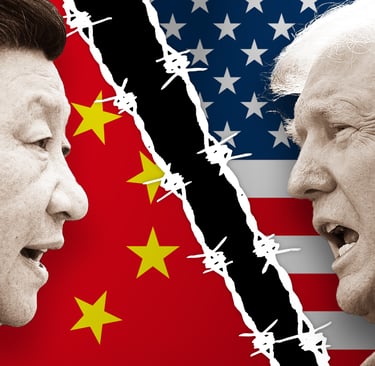
China’s Expanding Influence in Africa
Over the past decade, China has entrenched itself as one of Africa’s most influential external partners, blending economic, military, and diplomatic engagement. Through defense cooperation, Beijing now trains an estimated 2,000 African military officers each year and supplies arms or military vehicles to roughly 70 percent of African countries.
China has also increased its military visibility through joint exercises. Recent examples include large-scale Tanzania–China–Mozambique drills in 2024 and China–Egypt air force exercises in 2025, signaling Beijing’s growing role as a security partner on the continent.
Belt and Road Initiative and Economic Reach
At the core of China’s influence is the Belt and Road Initiative (BRI). Between 2013 and 2023, Chinese firms signed more than $700 billion in contracts across Africa, largely focused on roads, railways, ports, power plants, and digital infrastructure. By 2025, 53 African countries had signed BRI agreements.
While these projects have helped close infrastructure gaps, critics argue they have also increased debt vulnerabilities, environmental damage, and political dependence. Despite these concerns, China continues to be attractive to African governments due to its speed, scale, and willingness to finance projects Western donors often avoid.
By 2026, Beijing’s Africa strategy has shifted toward development, technology transfer, and modernization. As U.S. and European aid has declined in some sectors, China has stepped in with investments in electricity, telecommunications, industrial parks, and vocational training, positioning itself as a long-term development partner that delivers jobs and visible infrastructure.
How the United States Can Counter China in Africa
Analysts argue that Washington’s response should be Africa-centric rather than narrowly focused on countering China. Programs like Prosper Africa offer a foundation for this approach by promoting transparent, private-sector–led trade and investment between the U.S. and African economies.
The U.S. can strengthen its position by helping small and medium-sized enterprises access capital, supporting American firms entering African markets, and aligning investments with the African Continental Free Trade Area (AfCFTA). Doubling two-way trade and investment would provide African countries with viable alternatives to Chinese financing.
Financing and Strategic Investments
A key U.S. advantage lies in financing quality rather than quantity. The U.S. International Development Finance Corporation (DFC) has built a portfolio exceeding $13 billion across Africa, offering better governance standards and more sustainable debt structures than many Chinese loans.
Projects such as the 2025 DFC-backed potash mine in Gabon demonstrate how Washington can compete in strategic sectors like critical minerals, energy, and logistics. These investments are increasingly tied to supply chain security and industrial resilience.
Under President Donald Trump, U.S. policy has emphasized transactional arrangements, including minerals-for-security or infrastructure-for-access deals. Supporters argue this approach avoids open-ended aid while delivering clear mutual benefits, though critics warn it risks sidelining governance and development goals.
Extending the Strategy to Other Developing Economies
Beyond Africa, the U.S. faces similar competition with China across LEDCs in Asia, Latin America, and parts of the Middle East. One proposed strategy is to challenge China’s continued classification as a “developing country” in international institutions.
Washington could push for stricter definitions—limiting special treatment to countries with gross national income below roughly $4,255 per capita—while requiring upper-middle-income states like China to shoulder equal obligations. This would reduce Beijing’s ability to benefit from relief measures while competing globally.
The “Three C’s” Approach
In both Africa and other LEDCs, experts propose a “3 C’s” framework: confrontation, cooperation, and competition. This would involve confronting harmful lending and opaque practices, cooperating on global challenges such as climate change and public health, and competing through private-sector investment and high-quality infrastructure.
Partnering with regional development banks for co-investments—potentially up to $5 billion in energy and transport projects—could amplify U.S. impact while reducing risk.
A Strategic Choice for Washington
China’s growing presence in Africa reflects long-term planning, sustained investment, and a willingness to operate where others hesitate. For the United States, matching Beijing dollar-for-dollar is unrealistic. However, by emphasizing transparency, sustainability, and mutually beneficial trade, Washington can offer African nations—and other developing economies—a credible alternative.
How effectively the U.S. executes this strategy will shape not only Africa’s future, but also the global balance of influence across the developing world.
Photo: Courtesy
MORE NEWS
© 2026. Ke Press Global. A Ke Harbor Company. All rights reserved.
FOLLOW KE PRESS GLOBAL ON :
Contact us