
China’s Pivot to Russian Oil and the Global Market Fallout Amid U.S. Control of Venezuelan Energy
As the U.S. asserts control over Venezuelan oil and restricts Russian and Chinese access to the country’s energy sector, China is deepening its reliance on Russian crude, reshaping global oil trade patterns. This shift affects pricing, geopolitics, and the balance of influence—with broader implications for energy security, sanctions regimes, and U.S. dominance in global markets.
Emmanuel Makome
2/5/20263 min read
U.S. Moves to Control Venezuelan Oil
The U.S. Treasury recently issued a license permitting American firms to supply Venezuela with oil and gas equipment while explicitly excluding Russia, China, Iran, Cuba and North Korea from participating in Venezuelan oil agreements and joint ventures. Contracts must be governed under U.S. law and payments routed through U.S.-controlled funds, effectively enabling Washington to shape Venezuela’s oil sector while blocking rival countries from engaging in production activities.
This comes after U.S. forces seized several Venezuelan and Russia-linked oil tankers in late 2025 and early 2026 as part of an effort to enforce sanctions and control exports, part of a broader shift in how Washington views energy as a strategic tool.
China’s Continued Appetite for Discounted Oil
Before these recent restrictions, China imported significant volumes of Venezuelan crude — roughly 4.5% of its seaborne oil imports — and rebranded much of it after arrival, acknowledging the importance of heavy crude grades in its refining mix. Venezuelan supplies helped China diversify beyond Middle Eastern grades and lower overall import costs.
However, U.S. pressure on shipping — including seizures and tighter enforcement of sanctions — has sharply reduced the flow of Venezuelan barrels to Asia. China’s independent refineries, known as “teapots,” which relied heavily on cheap oil from countries like Venezuela, Iran, and Russia, have been adapting by increasing their imports from other sanctioned sources, given continuing supply from Russia and Iran.
China’s Deepening Dependence on Russian Crude
With Venezuelan supplies constrained, Beijing has boosted its imports of Russian oil, often at steep discounts amid sanctions-driven market dynamics. Russia’s seaborne crude shipments to China surged to record levels early in 2026, rising nearly 46% year-on-year, as Moscow pivots eastward to sustain its energy revenue flows amid Western pressure.
This trend reinforces a longer-term pattern: China has substantially increased its Russian oil imports over recent years, making Russia one of its main energy partners even as ties with the U.S. fray.
Market and Geopolitical Impacts
1. Diversification and Risk Mitigation
China’s growing reliance on Russian crude helps it hedge against disruptions in Middle Eastern supplies and counter U.S. sanctions pressures. At the same time, its large stockpiles of crude — estimated in the hundreds of millions of barrels — provide a buffer against near-term shocks.
2. Discount Pricing and Refinery Economics
Russian crude has been offered at heavy discounts relative to Brent benchmarks, making it attractive to Chinese refiners even as global oil prices remain sensitive to geopolitical risk. This price advantage helps China maintain competitive refining margins, particularly for heavy crude processing.
3. Erosion of U.S. Energy Influence
By barring Russia and China from Venezuelan oil deals and concentrating rights within U.S.-aligned firms, Washington aims to undercut Moscow’s and Beijing’s footholds in Latin American energy markets. However, the exclusion has provoked strong reactions — Moscow condemned the restrictions as “discrimination” and signaled intentions to clarify its position diplomatically.
At the same time, U.S. energy officials have emphasized that legitimate Chinese investment isn’t prohibited broadly, but caution against deals that may undermine market transparency or facilitate sanction evasion.
4. Supply Chain Realignment
With Chinese access to Venezuelan crude limited, Chinese refiners and traders have increasingly turned to Russian and Iranian sources, reinforcing alternative pathways outside U.S.-dominated markets. This trend contributes to a multipolar energy order, where major consumers like China can mitigate sanctions impacts by pivoting among suppliers.
Broader Strategic Implications
The evolving oil dynamics between the U.S., China, and Russia highlight a broader shift in geopolitics:
Energy security now intersects directly with great-power rivalry as Washington seeks to leverage sanctions and legal frameworks to enforce strategic priorities.
China’s pivot to Russian supplies reduces its vulnerability to disruptions in Western-linked oil markets, while enabling Moscow to sustain export revenues despite sanctions.
Global trade patterns are fragmenting, with sanctioned and non-sanctioned flows creating parallel markets that challenge traditional pricing and influence mechanisms.
In this context, moves to exclude China and Russia from Venezuelan energy deals — even as U.S. companies engage there—could deepen broader Sino-Russian alignment in the energy sphere and accelerate efforts to build alternative trading systems outside U.S. legal and financial frameworks.
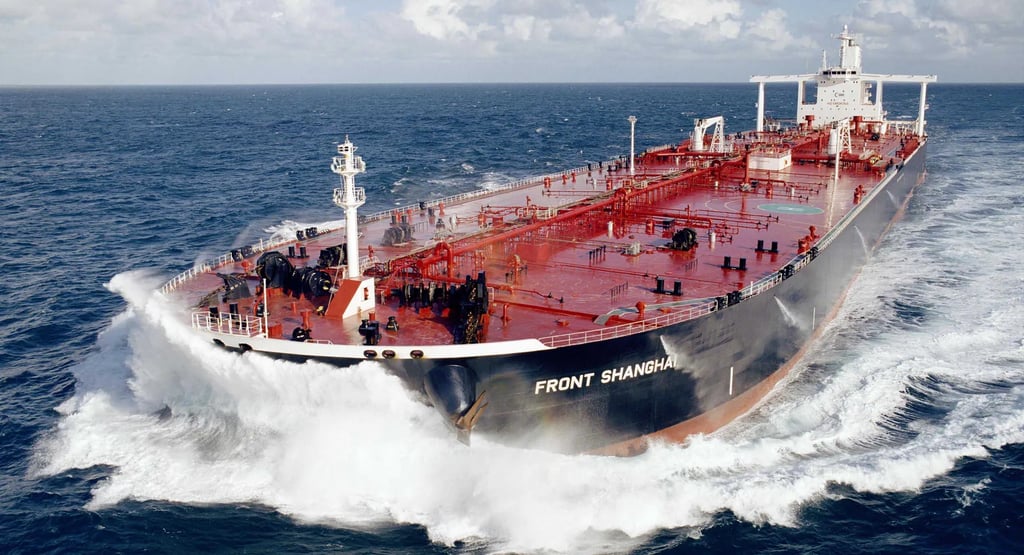
Photo: A supertanker Source: Frontline
MORE NEWS
© 2026. Ke Press Global. A Ke Harbor Company. All rights reserved.
FOLLOW KE PRESS GLOBAL ON :
Contact us