
Venezuela in Turmoil After U.S. Captures Nicolás Maduro, Echoing the Noriega Precedent
Venezuela has plunged into crisis following U.S. airstrikes and the dramatic capture of President Nicolás Maduro on 3 January 2026. As Washington signals direct involvement in Venezuela’s transition, the operation is drawing sharp comparisons to the U.S. capture of Panamanian leader Manuel Noriega in January 1990.
WORLD
Emmanuel Makome
1/4/20263 min read
U.S. Military Action and Maduro’s Capture
As of early January 2026, Venezuela is facing its most severe political and security crisis in decades after the United States launched airstrikes and captured President Nicolás Maduro. On 3 January, U.S. forces struck multiple military and government targets in northern Venezuela, including locations near Caracas and the strategic Fuerte Tiuna military base.
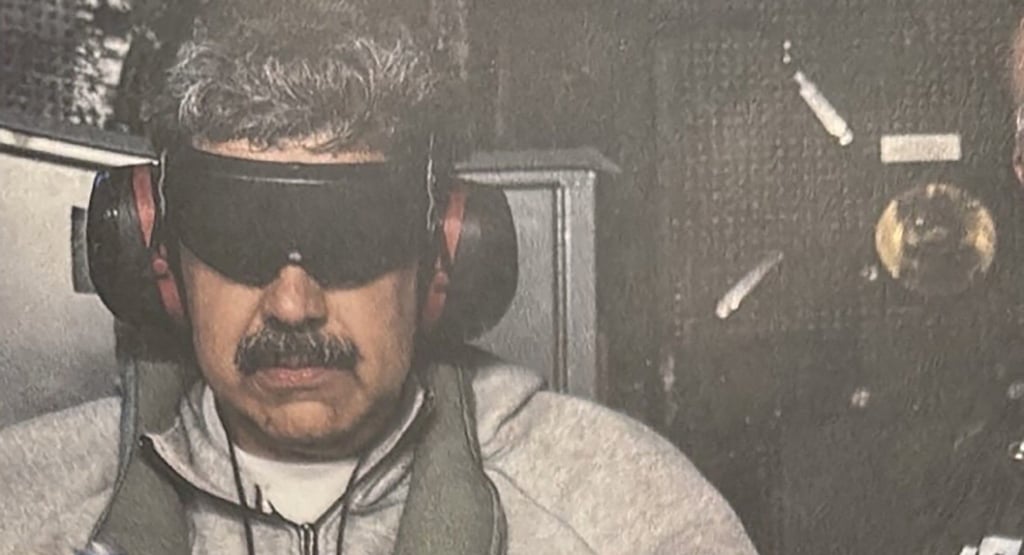
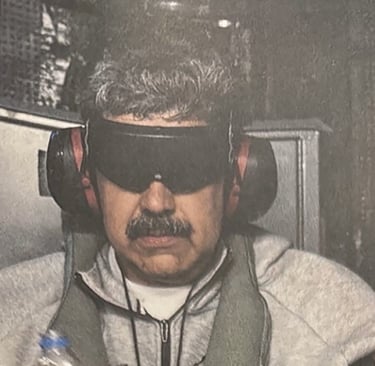
According to U.S. officials, American special forces—reportedly Delta Force—raided Maduro’s residence in Caracas, capturing both the president and his wife, Cilia Flores. The pair were immediately flown to New York, where they are now being held at a federal detention facility.
Images and videos circulating globally show Maduro in handcuffs under heavy U.S. law-enforcement escort, arriving at a Drug Enforcement Administration (DEA) facility in New York City. U.S. Attorney General Pam Bondi confirmed that both Maduro and Flores have been indicted in the Southern District of New York on charges of narcoterrorism and operating a drug-trafficking network accused of funneling cocaine into the United States.
Washington’s Position and Plans for Venezuela
President Donald Trump publicly confirmed the operation, stating that the United States will “run” Venezuela until a “safe, proper, and judicious transition” of power is achieved. Trump indicated that U.S. companies—particularly in the oil and energy sectors—would be “very strongly involved” in managing Venezuela’s economy during the interim period.
Trump also claimed that Vice President Delcy Rodríguez had been in contact with U.S. officials and was “essentially willing to do what we think is necessary” to stabilize the country. Rodríguez has strongly denied this claim, insisting that Venezuela’s sovereignty is non-negotiable.
Venezuelan Government Response and Disputed Leadership
In Caracas, the Supreme Tribunal of Justice ordered Vice President Delcy Rodríguez to assume the presidency in Maduro’s absence, citing the need to preserve constitutional and administrative continuity. Rodríguez condemned Maduro’s capture as an “illegal and illegitimate kidnapping” and called on Venezuelans to defend national sovereignty.
The government declared a nationwide state of emergency and a “state of external commotion,” accusing the United States of military aggression designed to seize Venezuela’s oil and strategic resources. State media broadcast images of damaged military infrastructure and urged citizens to remain calm and united.
Casualties and the Situation on the Ground
Venezuelan Defense Minister Vladimir Padrino López reported that at least 40 people—both civilians and military personnel—were killed during the U.S. strikes. Rockets and missiles reportedly hit areas close to residential neighborhoods around Caracas.
Residents across the capital reported loud explosions, low-flying aircraft, power outages, and communications disruptions. As a precautionary security measure, Venezuela temporarily closed its border with Brazil.
International Reactions and Divisions
The U.S. operation has triggered widespread international condemnation. Russia, China, and several Latin American governments described the strikes as a clear violation of international law and an attack on a sovereign nation. Calls for an emergency meeting of the UN Security Council have intensified, with countries such as South Africa and Singapore expressing grave concern over the precedent set by the intervention.
At the same time, Venezuela’s leading opposition figure, María Corina Machado, welcomed Maduro’s removal. She described the moment as a “time for freedom,” pledging to restore democracy, release political prisoners, and begin rebuilding the country’s shattered economy.
Parallels With Noriega’s Capture in 1990
The events of 3 January 2026 have drawn immediate comparisons to another dramatic U.S. intervention in Latin America: the capture of Panamanian leader Manuel Noriega on 3 January 1990. Noriega was seized by U.S. forces following the U.S. invasion of Panama and flown to the United States to face drug-trafficking charges.
Like Maduro, Noriega was accused by Washington of narcotics trafficking and abuse of power. His arrest marked the end of his rule and led to a U.S.-backed political transition in Panama. Critics at the time argued that the operation violated international law, while supporters claimed it removed a dictator and restored democracy.
The Maduro operation appears to follow a similar pattern: military force, a high-profile capture, prosecution in U.S. courts, and promises of democratic transition—raising questions about whether Venezuela is now entering a comparable post-intervention phase, or whether the consequences could be far more destabilizing given Venezuela’s size, resources, and regional influence.
What Happens Next?
With Maduro in U.S. custody and Delcy Rodríguez leading a government whose legitimacy is fiercely contested, Venezuela faces a period of extreme uncertainty. The United States has signaled that it will play a direct role in shaping Venezuela’s political and economic future, but has provided few concrete details on the timeline or structure of a transition.
In the coming days, Venezuela is likely to see intense diplomatic pressure, potential protests or armed resistance, and heated debates in international forums over the legality, morality, and long-term consequences of the U.S. intervention—an unfolding crisis that many now view as the most consequential in the region since the Noriega era.
Photo: Reuters
MORE NEWS
© 2026. Ke Press Global. A Ke Harbor Company. All rights reserved.
FOLLOW KE PRESS GLOBAL ON :
Contact us